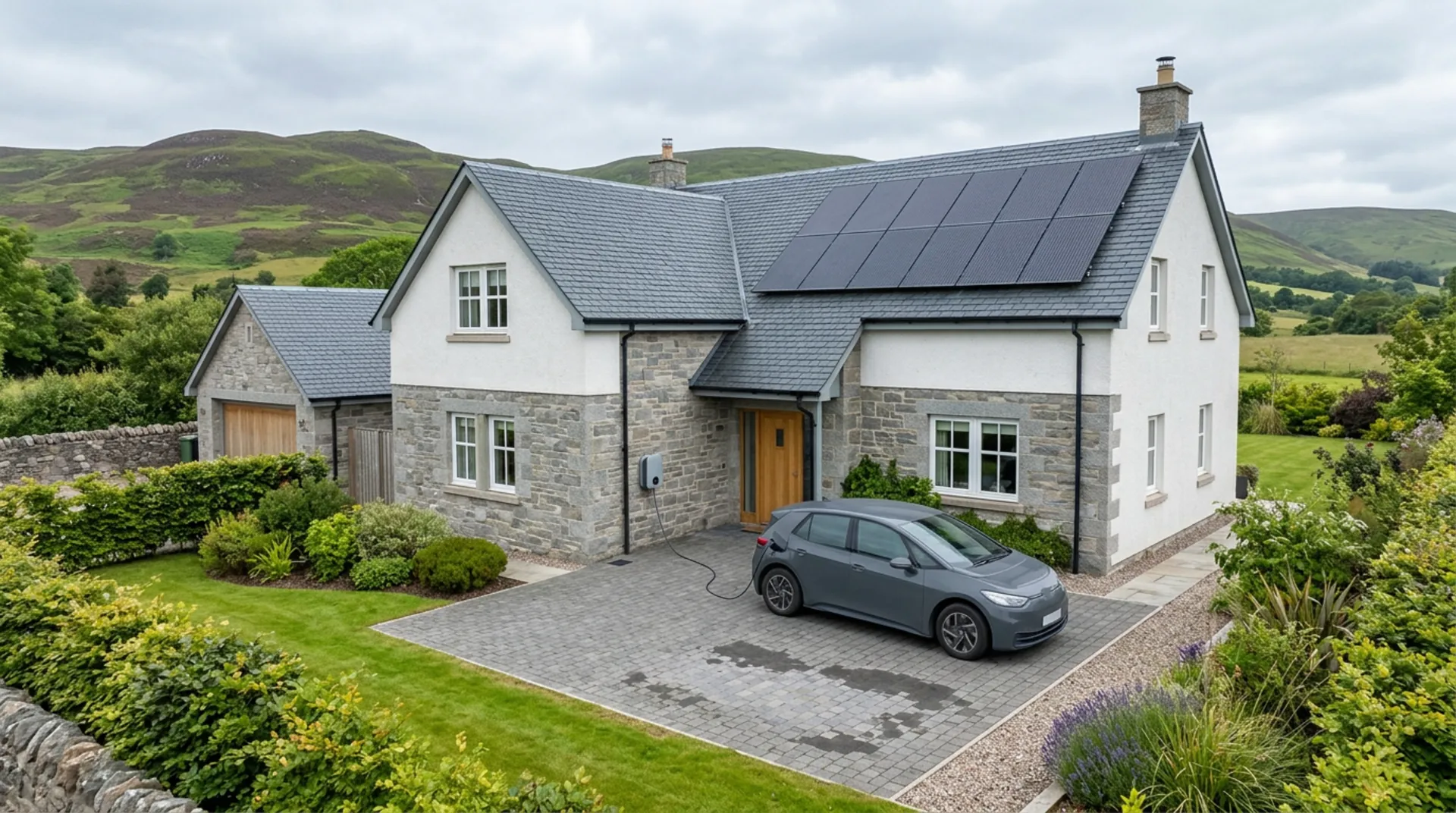
Solar panels · Home battery · EV charger
Your car and your house can run off the same cheap electricity
Quick answer
How can a Scottish home and car share the same cheap electricity?
A home battery stores electricity bought at a cheap overnight rate, and the house and car both run on it instead of peak-rate power. Solar panels top the battery up during the day. Installed together as one system, the panels, battery and charger are sized around your roof, your driving and your household's daily routine.
- We install through MCS-certified partners
- Interest-free credit up to £30,000, subject to status.
- Covering all of Scotland
No-obligation quote
Ready to see what it costs for your property?
Tell us your postcode, your monthly bill and your property type. We will call to arrange a survey, then send one written quotation for solar, battery and charger as one system.
- We install through MCS-certified partners
- Interest-free credit up to £30,000, subject to status.
- Covering all of Scotland
An electric car adds a second large load to your electricity use. Rather than paying the peak rate for both, a battery and a smart charger let the house and the car share cheaper overnight electricity and whatever your solar panels generate during the day. For a deeper look at what solar panels cost and how export payments work, see our companion site Solar Cost Scotland.
One system, three parts
Solar, battery and charger, designed to work together
Each part does a job on its own. Installed as one system on one quotation, they share the same cheap electricity.
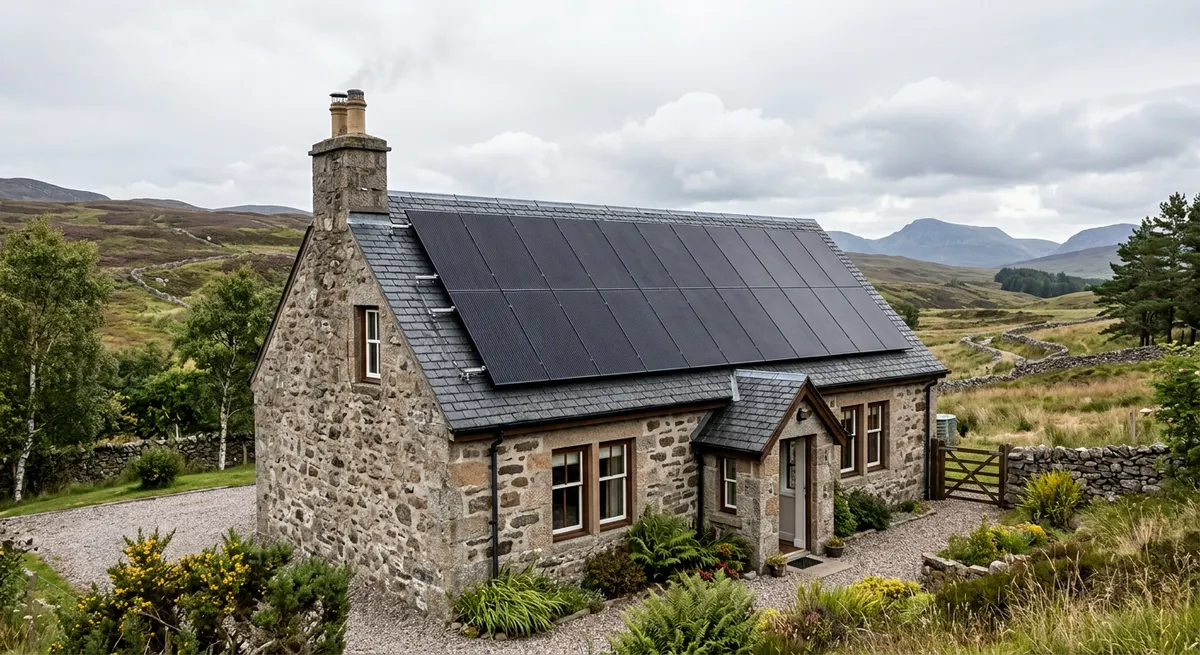
Solar panels
Panels sized to your roof and your usage, generating daytime power from your own roof for the house and the car.
Charging your EV from solar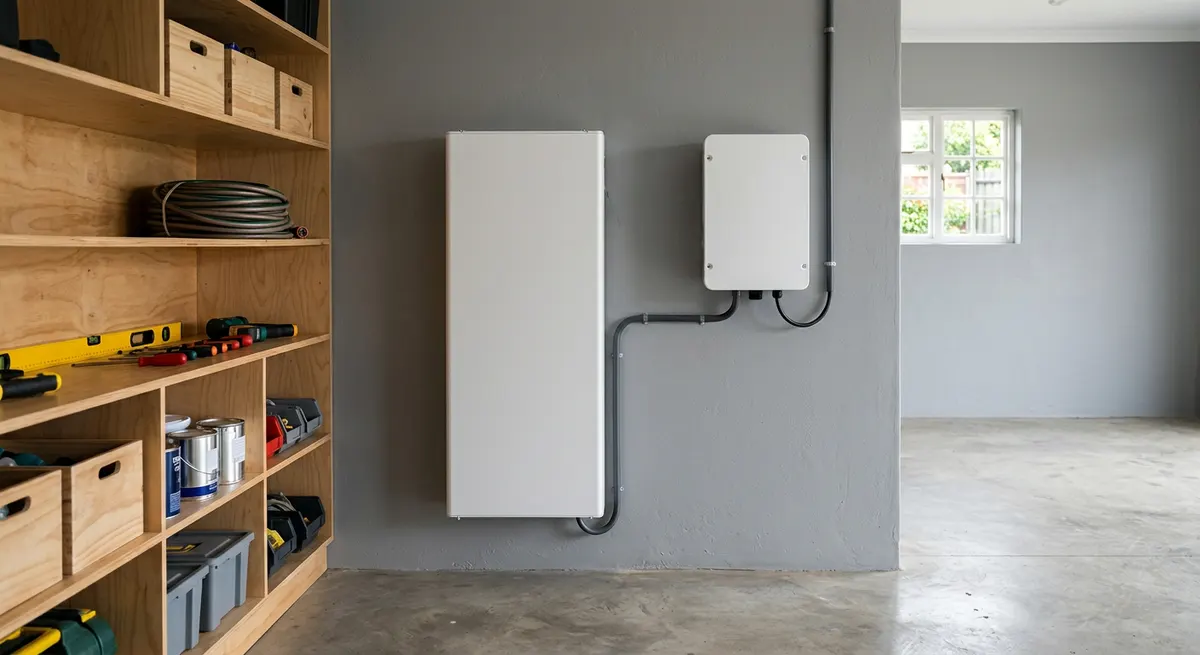
Home battery
Stores cheap overnight electricity and spare solar so you use it when rates are high.
EV tariffs and home batteries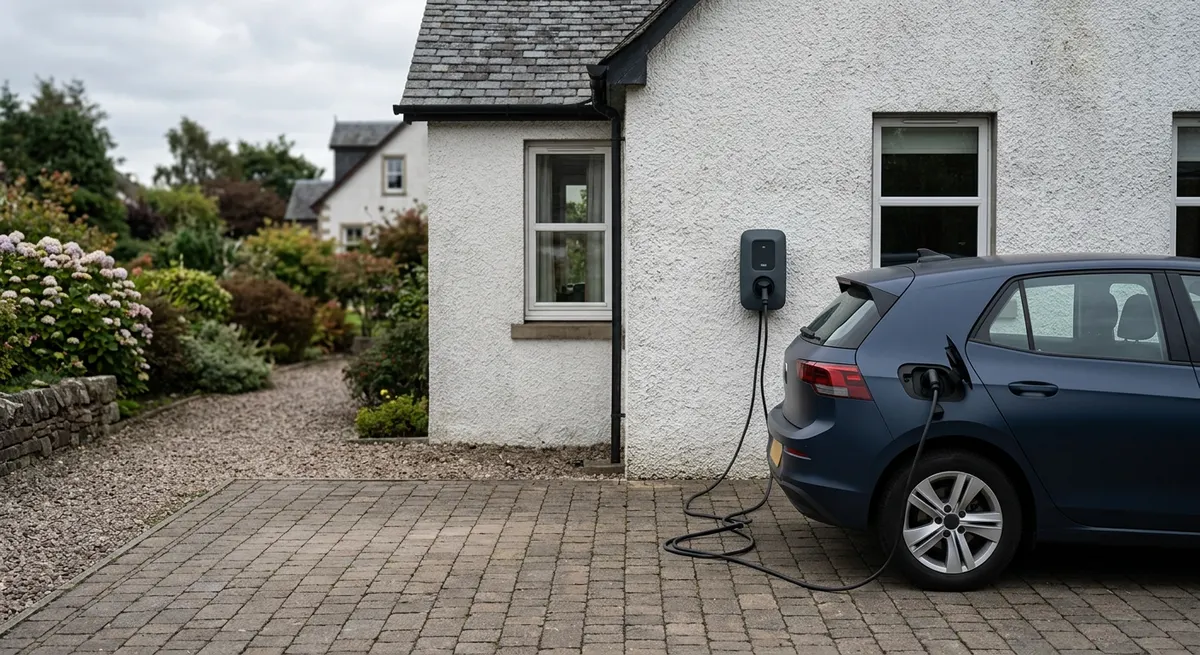
EV charger
A home charge point, installed and commissioned, with overnight charging scheduled for you.
Home EV charger installationBusiness & Farms
Solar and batteries for businesses, farms and rural properties
The same approach we use for homes, scaled to commercial roofs, farm buildings and rural sites across Scotland.
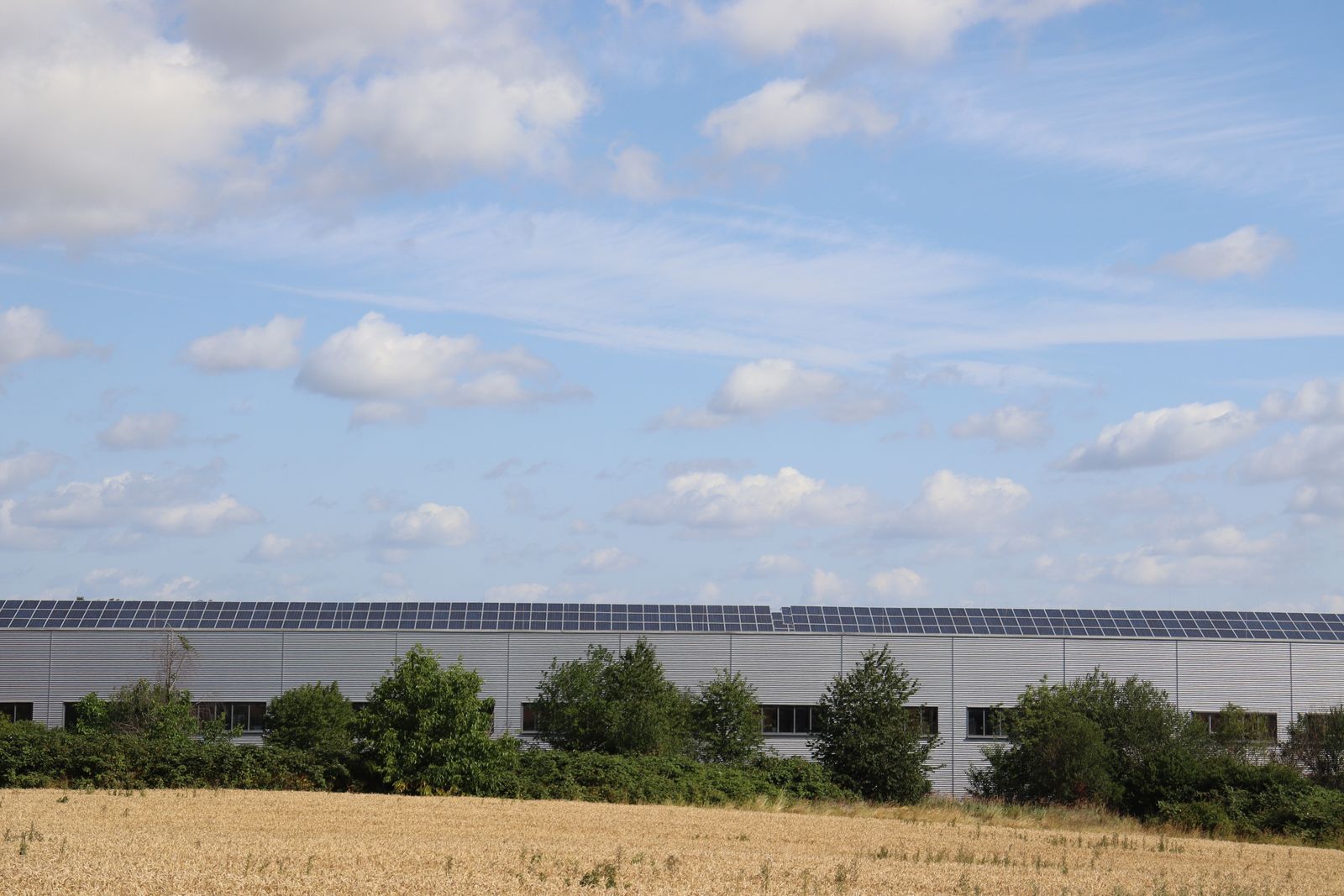
Commercial solar
Panels on offices, workshops and units that use most of their power in working hours.
Find out more
Commercial battery
Storage sized to your site, so solar and off-peak power cover the busy hours.
Find out more
Farm solar
Shed, barn and ground-mounted arrays designed around the working pattern of the farm.
Find out more
Rural properties
Solar and batteries for homes, lets and estates at the end of a long line.
Find out moreHow the running costs compare
What changes when your car and house share the same supply?
A mile charged overnight on a time-of-use tariff usually costs much less than a mile on petrol or on the daytime rate. Your quotation shows the figures for your own tariff and car, with the assumptions written beside them.
Petrol
Running cost
Highest
- Price set at the pump and changes often
- No off-street charging needed
- Running cost rises with every mile
Grid charging (day rate)
Running cost
Lower
- Charging at your standard unit rate
- Convenient, but at the full daytime price
- Competes with the house for peak-rate power
Overnight charging (time-of-use)
Running cost
Lowest
- Car charges in the off-peak window
- Battery stores off-peak power for the house
- Solar tops up the battery during the day
Why a bigger electricity load is the point
An electric car adds a large new load to a household's electricity use. That is not a problem to solve; it is the reason the system makes sense. More consumption means more of the cheaper overnight power and your own solar generation can be used instead of buying at the peak rate. The battery and the charger work on two loads, not one. If you are weighing up battery storage on its own, Battery Retrofit Scotland covers standalone home battery installs, and you can pay monthly for your solar installation through our finance partner. Part of the Scottish Energy Efficiency network.
Comparisons are general. Actual costs depend on your tariff, your car's efficiency, your mileage and your household usage. Charge point installation is subject to survey and to the network operator's approval.
How it works
How does the installation process work?
Three steps: a survey, a single quotation for the full system, and installation by our MCS-certified partners over one to two days on site.
- Step 01
We survey your property and your driving
A surveyor visits, checks your roof, your switchboard, and your parking. They look at your annual mileage and your current electricity usage to size the system. Your postcode determines whether SP Energy Networks or SSEN is your network operator.
- Step 02
We design one system: panels, battery, charger
You get a single quotation for solar PV, battery storage, and an EV charge point sized to work together. MCS-listed equipment, confirmed in writing on your quotation. The battery is sized to store enough overnight power for both the house and the car.
- Step 03
Installation and commissioning
We install through MCS-certified partners. A typical install takes one to two days on site. The charge point is commissioned and tested. You are shown how to schedule charging on your overnight tariff.
What you get
What is included in the installation?
Solar panels, a battery, an EV charge point, one quotation, one warranty, and installation through MCS-certified partners — all in a single package.
- Solar PV panels, sized to your roof and your usage
- Battery storage, sized to cover overnight house and car charging
- EV charge point, installed and commissioned
- MCS-listed equipment, confirmed in writing on your quotation
- Single quotation for the full system — one installer, one warranty
- Installation through MCS-certified partners
- MCS certificate for your installation, issued through our MCS-certified installation partner
- Scaffolding quoted up front — included or charged as an extra, stated clearly
- Network operator approval handled for you
- Setup and walkthrough on scheduling overnight charging
Interest-free credit of up to £30,000 is available, subject to status and affordability. Terms and conditions apply.
Honest advice
Should you not bother?
If you have no off-street parking you cannot have a home charge point, and most of this page stops applying.
If you drive very few miles a year, the fuel saving is small and the system has to earn its keep on the house alone. A battery and panels can still make sense, but the car is not pulling its weight in the calculation.
If you are on a single flat tariff with no overnight rate, the ledger on this page does not apply to you yet. You would need to switch to a time-of-use tariff first to get the cheap overnight power that makes the battery and charger pay.
If your roof is heavily shaded or faces north, your solar generation will be lower than the ranges on this page suggest. The survey will tell you.
Before you sign
What five questions should you ask any installer?
These five will tell you whether the installer is properly certified, whether their guarantee is real, and who is actually doing the work.
- 1
What is your MCS certification number?
If they cannot give you a number, they are not MCS-certified. The number should match on the certificate and on the quotation.
- 2
Are you a TrustMark registered business?
TrustMark registration gives you a route to resolution if something goes wrong. Ask for the registration number.
- 3
Is your guarantee insurance-backed, and does it survive if you cease trading?
A guarantee is only as good as the company behind it. Insurance-backed guarantees survive if the installer goes out of business.
- 4
Is scaffolding included, or charged as an extra?
Some installers quote low and add scaffolding later. It should be stated clearly on the quotation either way.
- 5
Who actually carries out the installation, and are they the same company whose name is on the certificate?
Some sales companies subcontract everything. You want the name on the MCS certificate to be the company doing the work.
FAQ
Frequently asked questions about solar and EV charging
Six questions covering running costs, batteries, network operators, installation times and who carries out the work.
Is charging an electric car at home cheaper than petrol?
Charging at home, particularly on an overnight time-of-use tariff, usually costs far less per mile than petrol. The exact figure depends on your tariff and your car, so your quotation shows the assumptions rather than a headline number.
Do I need a battery to make solar panels worthwhile in Scotland?
A battery lets you use your solar generation in the evening instead of exporting it cheaply. It also lets you buy electricity at an overnight rate and use it during the day, which gets more value from the whole system.
Can I charge my electric car from solar panels?
Yes. On sunny days surplus solar can charge the car directly through a smart charger. A battery stores excess generation so the car can draw on it in the evening, and in winter the car charges overnight at the off-peak rate instead.
Who is the network operator for my area in Scotland?
SP Energy Networks covers central and southern Scotland. SSEN covers the north, Highlands and Islands. Your postcode decides which one applies, and your installer handles the notification for you.
How long does solar and battery installation take?
A typical home solar and battery installation takes one to two days on site. The survey and network approval happen beforehand, and the charger is usually fitted during the same visit.
Who installs the system?
We install through MCS-certified partners. The installer named on your MCS certificate is the company that does the work, and you can check the certificate details before you sign. Interest-free credit up to £30,000, subject to status.
Guides
Guides
Plain-English guides on solar, batteries and EV charging in Scotland, with the assumptions on the table and every design subject to survey.
Charging Your EV from Solar Panels in Scotland
How solar panels and a home battery charge an electric car in Scotland, what happens on dull winter days, and how a system is sized to your driving.
Read the guideHome EV Charger Installation in Scotland
What a home EV charger installation in Scotland involves, from survey to commissioning, including network operator approval and choosing a charger.
Read the guideEV Tariffs and Home Batteries in Scotland
How time-of-use tariffs and a home battery work together to lower house and car running costs in Scotland, explained in plain terms with no guesswork.
Read the guideSolar, Battery and EV Charger Bundle in Scotland
Why fitting solar panels, a home battery and an EV charger as one system in Scotland is simpler than using three installers, and what a bundle includes.
Read the guideEV Charger Cost in Scotland
What affects the cost of installing a home EV charger in Scotland, from the charger itself to cabling and fuse board work, so your quotation makes sense.
Read the guideSolar, Battery and EV Charging FAQ in Scotland
Answers to common questions about solar panels, home batteries and EV charging in Scotland, covering installation, tariffs, networks and warranties.
Read the guideAreas we cover
Local advice for towns across Scotland
Roofs, parking and planning rules change from place to place. Our area guides explain what matters where you live.